
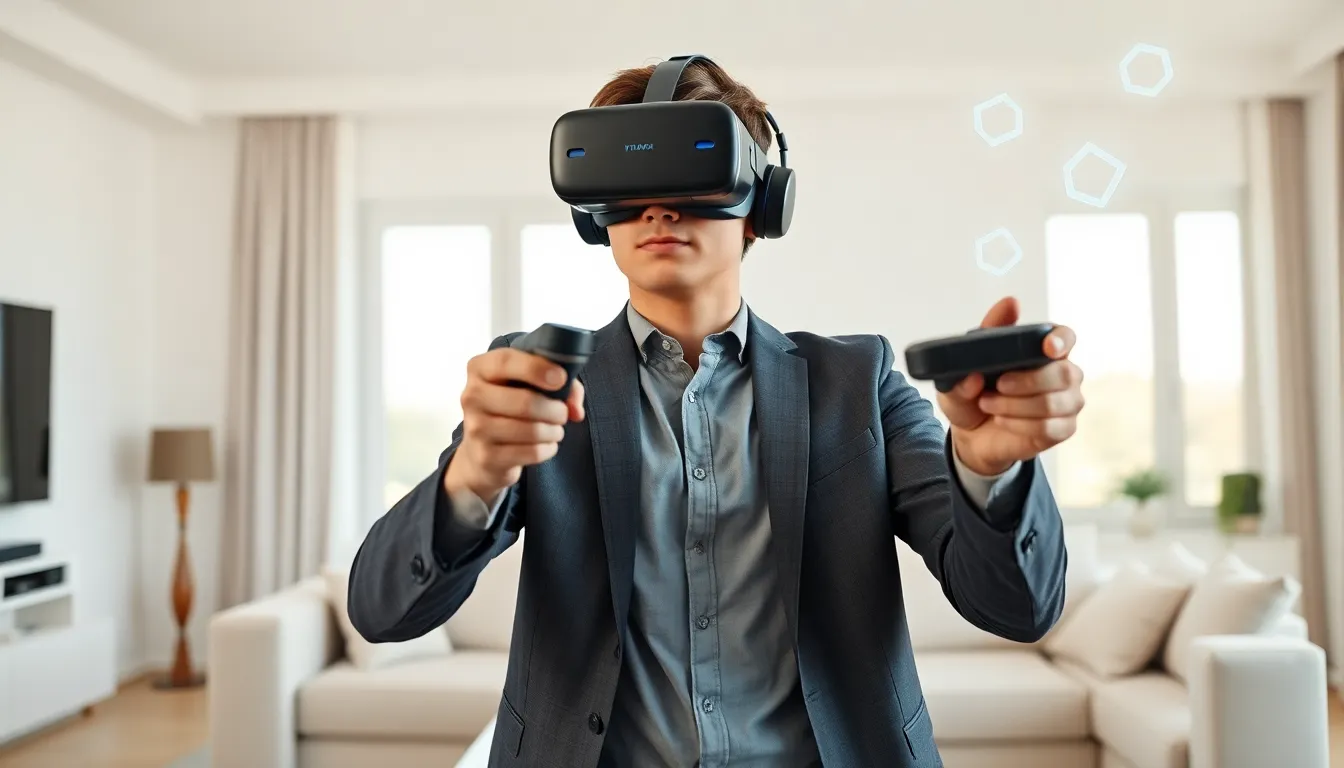
VR gaming puts players inside video games. Instead of watching action on a flat screen, users wear a headset that surrounds their vision with a 3D virtual world. They can look around, move, and interact with digital objects as if those objects were real.
This technology has grown quickly over the past decade. Major companies like Meta, Sony, and Valve now sell VR headsets to millions of consumers worldwide. The global VR gaming market reached $22.7 billion in 2024 and continues to expand each year.
For newcomers, VR gaming can seem confusing. What equipment do you need? How does the technology actually work? What kinds of games can you play? This guide answers those questions and helps beginners understand everything they need to start their VR gaming journey.
Table of Contents
ToggleKey Takeaways
- VR gaming immerses players inside video games using headsets that display 3D worlds and track head and body movements in real time.
- Three main headset types exist: standalone devices like Meta Quest 3, PC-connected headsets for better graphics, and console options like PlayStation VR2.
- VR gaming spans multiple genres including action shooters, rhythm games like Beat Saber, horror experiences, flight simulators, and social platforms.
- The technology creates “presence”—a feeling of actually being inside a virtual space—through combined visual displays, motion tracking, and spatial audio.
- Benefits include physical activity and unmatched immersion, while drawbacks include potential motion sickness, costs ranging from $300-$1,000, and space requirements of at least 6.5 by 6.5 feet.
How Virtual Reality Gaming Works
VR gaming relies on several technologies working together. The headset contains two small screens, one for each eye. These screens display slightly different images that create a stereoscopic 3D effect. The brain combines these images into a single picture with real depth perception.
Motion tracking is the second key component. Sensors inside the headset detect head movements in real time. When a player looks left, the virtual world shifts left. When they look up, they see the virtual sky. This tracking happens dozens of times per second, creating smooth and responsive visuals.
Many VR gaming systems also track hand and body movements. Controllers held in each hand let players grab virtual objects, swing swords, or fire weapons. Some advanced systems use external cameras or base stations to track full-body position, allowing players to walk around virtual spaces.
Audio plays an important role too. VR headsets include built-in speakers or headphone jacks that deliver spatial sound. Players hear sounds coming from specific directions. A virtual enemy approaching from behind will produce audio that seems to come from behind the player’s head.
All these elements, visual displays, motion tracking, hand controllers, and spatial audio, combine to create “presence.” Presence describes the feeling of actually being inside a virtual space. Good VR gaming makes players forget they’re standing in their living room.
Essential Equipment for VR Gaming
Starting with VR gaming requires specific hardware. The most important piece is the VR headset itself. Several options exist at different price points.
Standalone Headsets
Standalone VR headsets contain all necessary computing hardware inside the device. The Meta Quest 3 is the most popular example, priced around $500. These headsets don’t need a PC or console connection. Players simply charge the headset, put it on, and start playing. Standalone devices offer convenience but have less processing power than PC-connected options.
PC VR Headsets
PC VR headsets connect to a gaming computer via cable or wireless adapter. The Valve Index and HP Reverb G2 fall into this category. These headsets deliver better graphics and more demanding games because they use the PC’s powerful hardware. But, they require a gaming PC costing $1,000 or more.
Console VR
Sony’s PlayStation VR2 works exclusively with the PlayStation 5. This option suits players who already own a PS5 and want high-quality VR gaming without building a PC. The headset costs around $550.
Additional Equipment
Beyond the headset, VR gaming needs adequate space. Most systems require a clear play area of at least 6.5 feet by 6.5 feet. Players should remove furniture and obstacles to prevent accidents.
Comfortable accessories help during longer sessions. Aftermarket head straps, prescription lens inserts, and face covers improve the VR gaming experience for many users.
Popular Types of VR Games
VR gaming spans many genres. Each type uses virtual reality’s unique strengths differently.
Action and Shooter Games
First-person shooters feel completely different in VR gaming. Players physically aim their controllers like real weapons, duck behind cover with their bodies, and reload by mimicking real motions. Games like Half-Life: Alyx and Pistol Whip showcase how intense VR action can become.
Rhythm and Music Games
Beat Saber remains one of the best-selling VR games ever made. Players slash colored blocks with virtual lightsabers in time with music. These rhythm games provide excellent exercise while delivering satisfying gameplay. The physical nature of VR gaming makes music games especially engaging.
Horror and Thriller Games
VR horror games deliver genuine scares. Being inside a haunted environment creates fear that flat screens cannot match. Titles like Resident Evil 4 VR and Phasmophobia use the immersion of VR gaming to build real tension.
Simulation and Exploration
Flight simulators, racing games, and exploration experiences thrive in VR. Sitting in a virtual cockpit or walking through historical recreations demonstrates VR gaming’s power beyond traditional action genres. Microsoft Flight Simulator with VR support puts players inside aircraft with stunning realism.
Social and Multiplayer Experiences
Platforms like VRChat and Rec Room let players meet others in shared virtual spaces. Users create avatars and interact through voice chat and body language. Social VR gaming has built active communities where people form genuine friendships.
Benefits and Drawbacks of VR Gaming
VR gaming offers unique advantages over traditional gaming. But, it also comes with limitations worth considering.
Benefits
Physical activity: Many VR games require movement. Players burn calories while boxing, dancing, or swinging weapons. Some people use VR gaming as part of their fitness routine.
Immersion: No other gaming format matches VR’s sense of presence. Players feel like they’ve entered another world rather than simply watching one.
Unique experiences: VR gaming enables activities impossible in real life. Players can fly through space, shrink to insect size, or visit fantasy worlds with genuine presence.
Social connection: Multiplayer VR lets people interact with body language and spatial awareness. This creates more natural social experiences than voice chat alone.
Drawbacks
Motion sickness: Some players experience nausea during VR gaming, especially in games with artificial movement. This discomfort often decreases with practice, but it affects many beginners.
Cost: Quality VR gaming requires significant investment. Headsets cost $300-$1,000, and PC VR needs additional hardware expenses.
Space requirements: VR gaming needs room to move safely. People in small apartments may struggle to clear adequate play space.
Isolation: Unlike couch co-op or LAN parties, VR gaming separates players from others in the room. The headset blocks the real world completely.
Game library limitations: While growing rapidly, the VR gaming library remains smaller than traditional platforms. Some popular franchises lack VR versions.