
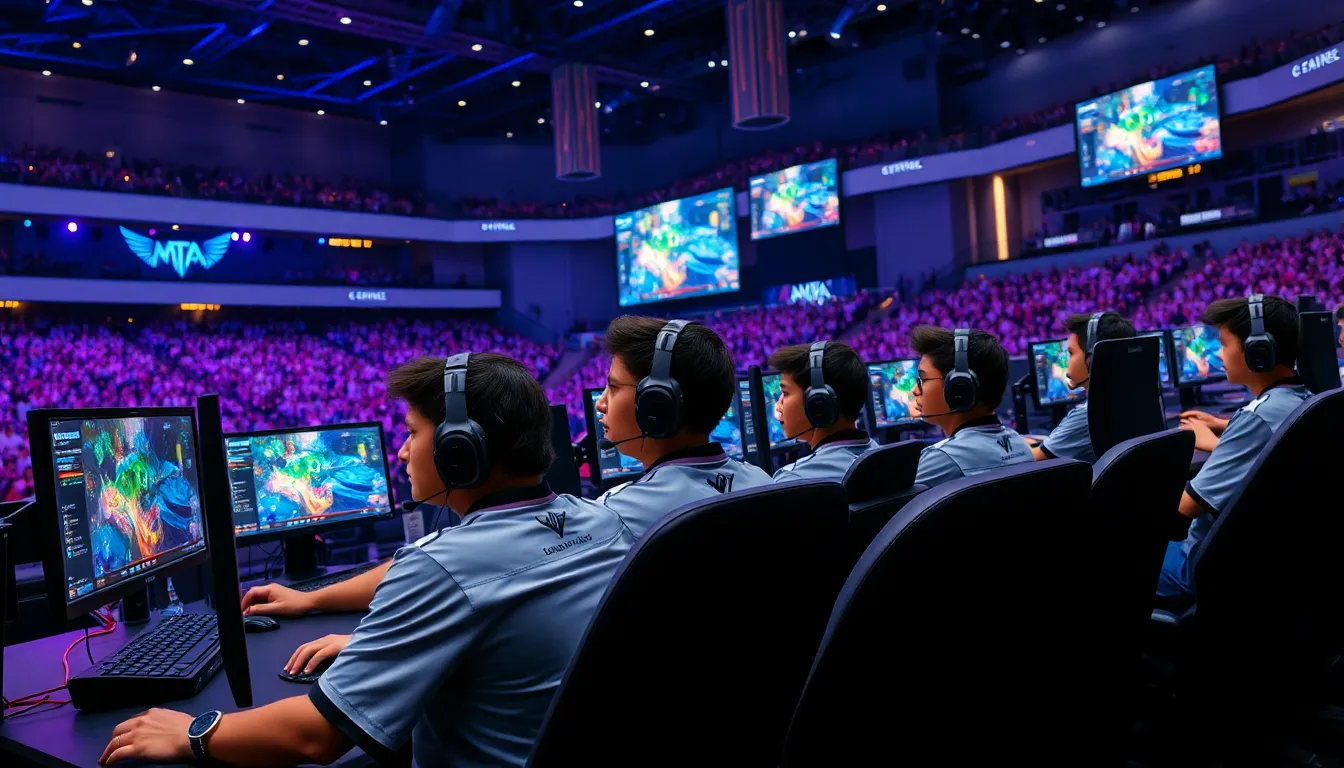
What is MOBA? This question crosses the mind of anyone who stumbles into the competitive gaming scene. MOBA stands for Multiplayer Online Battle Arena, a genre that has captured millions of players worldwide. These games combine strategy, teamwork, and fast-paced action into matches that last anywhere from 20 to 60 minutes.
The MOBA genre emerged in the early 2000s and has since become one of the most-watched esports categories globally. Games like League of Legends and Dota 2 fill stadiums and draw millions of online viewers during major tournaments. But what makes MOBA games so addictive, and why do players keep coming back? This guide breaks down everything players need to know about this popular gaming genre.
Table of Contents
ToggleKey Takeaways
- MOBA stands for Multiplayer Online Battle Arena, a genre combining strategy, teamwork, and fast-paced action in matches lasting 20–60 minutes.
- The MOBA genre originated from the Defense of the Ancients (DotA) mod for Warcraft III in 2003 and has since become a dominant esports category.
- Core MOBA gameplay involves controlling a unique hero, farming gold and experience, and working with your team to destroy the enemy’s main structure.
- Popular MOBA games include League of Legends, Dota 2, Mobile Legends: Bang Bang, and Smite—each offering distinct playstyles and platforms.
- MOBA games attract millions of players through free-to-play accessibility, deep character variety, competitive ranking systems, and thriving esports scenes.
Understanding the MOBA Genre
A MOBA pits two teams against each other on a symmetrical map. Each player controls a single character, often called a hero or champion, with unique abilities and playstyles. The primary goal in most MOBA games is to destroy the enemy team’s main structure while defending your own.
The genre traces its roots back to a custom map for StarCraft called Aeon of Strife. But, the MOBA format truly took shape with Defense of the Ancients (DotA), a mod for Warcraft III released in 2003. This mod laid the foundation for what MOBA games would become.
MOBA games differ from other multiplayer titles in several key ways. Unlike first-person shooters, MOBA matches involve strategic planning and team coordination over pure reflexes. Players must understand their character’s role, manage resources, and make split-second decisions that affect the entire team.
The genre also features a progression system within each match. Players start weak and gain power by earning gold and experience. This creates a natural arc where early-game decisions directly impact late-game outcomes. A poorly played first five minutes can doom a team, while smart plays can set up a dominant victory.
Core Gameplay Mechanics
Every MOBA shares certain gameplay elements that define the genre. Understanding these mechanics helps new players grasp what makes these games tick.
Lanes and Map Structure
Most MOBA maps feature three lanes, top, middle, and bottom, connecting each team’s base. Automated units called minions or creeps spawn regularly and march down these lanes. Players farm these units for gold and experience while trying to push toward enemy structures.
Character Roles
MOBA games divide characters into distinct roles. Carries deal heavy damage but need protection early on. Supports help teammates with healing, shields, or crowd control abilities. Tanks absorb damage and initiate fights. Junglers roam between lanes, farming neutral monsters and ganking enemies. Each role contributes something essential to team success.
Objectives and Strategy
Beyond killing enemy players, MOBA matches revolve around objectives. Teams fight over powerful neutral monsters that grant buffs or push advantages. Destroying enemy towers opens up the map and weakens defenses. Smart teams balance farming, fighting, and taking objectives throughout a match.
Items and Builds
Gold earned during matches buys items that enhance a character’s abilities. Choosing the right items matters enormously. A damage dealer might build attack speed against tanky enemies or burst damage against squishy targets. This layer of customization adds depth to every MOBA game.
Popular MOBA Games to Try
Several MOBA titles dominate the market, each offering a slightly different experience.
League of Legends remains the most-played MOBA worldwide. Riot Games launched it in 2009, and it has maintained massive popularity ever since. The game features over 160 champions and hosts the League of Legends World Championship annually, with prize pools reaching millions of dollars.
Dota 2 appeals to players seeking deeper complexity. Valve released this free-to-play title in 2013, building on the original DotA mod. Dota 2’s annual tournament, The International, holds records for the largest esports prize pools in history, exceeding $40 million in some years.
Mobile Legends: Bang Bang brought the MOBA experience to smartphones. This game simplified certain mechanics to suit mobile play, creating shorter matches that work well for gaming on the go. It has become especially popular in Southeast Asia.
Smite offers a third-person perspective instead of the traditional top-down view. Players control gods and mythological figures from various pantheons. This camera angle creates a more action-focused feel.
Heroes of the Storm featured characters from Blizzard’s other franchises like Warcraft and Overwatch. Though Blizzard scaled back development in 2018, the game retains a dedicated player base.
Why MOBA Games Are So Popular
The MOBA genre attracts millions of players for several compelling reasons.
First, MOBA games offer incredible variety. With dozens or hundreds of characters to master, players can spend years learning new playstyles. Each match feels different based on team compositions and player decisions.
Second, the team-based nature creates social bonds. Many players form lasting friendships through MOBA gaming. Coordinating with teammates, celebrating victories, and learning from defeats builds community.
Third, MOBA titles provide free-to-play accessibility. Most major MOBA games cost nothing to download and play. This low barrier to entry has helped the genre spread globally.
Fourth, the competitive ladder gives players clear goals. Ranking systems motivate improvement and create meaningful stakes for each match. Climbing from Bronze to Diamond or Guardian to Immortal provides tangible progress markers.
Finally, the esports scene adds another dimension. Watching professional MOBA matches helps players learn strategies while enjoying elite-level competition. Major tournaments generate excitement comparable to traditional sports events.