
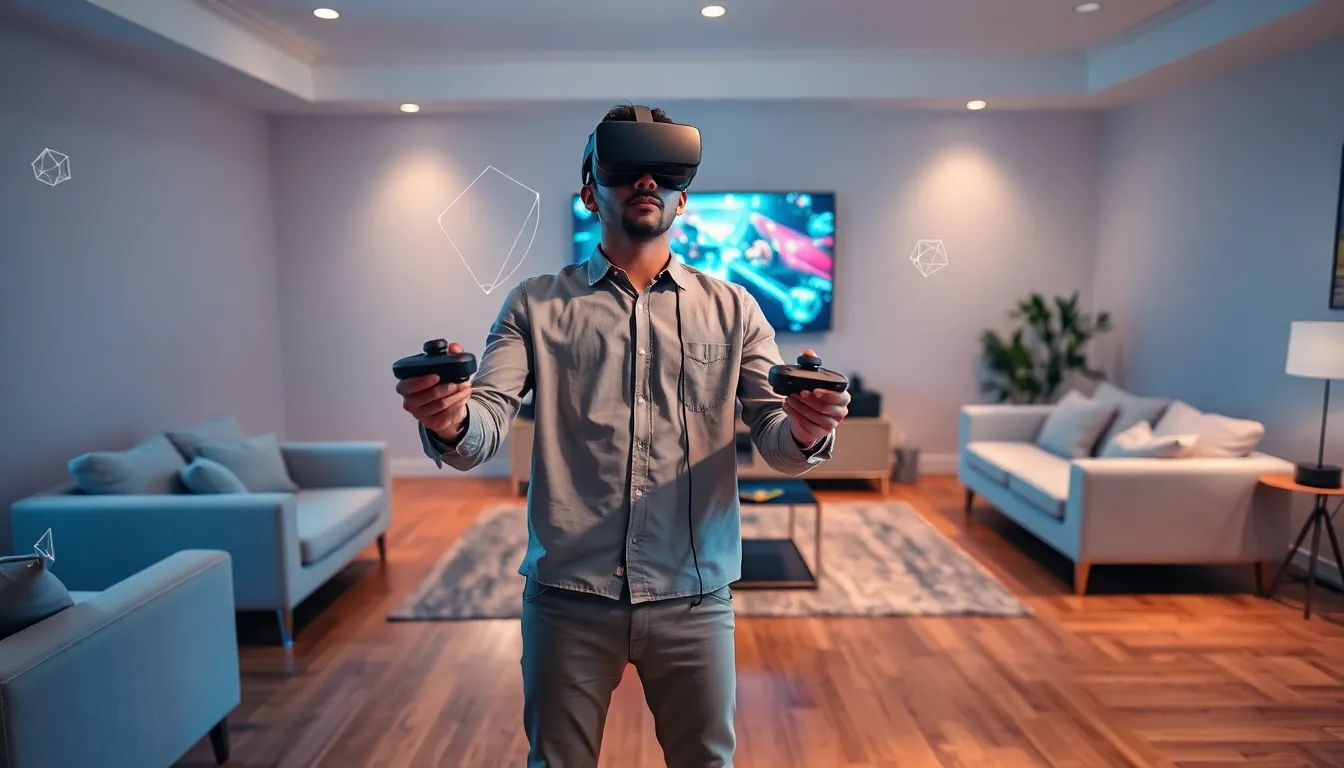
VR gaming has changed how people experience video games. Players no longer sit in front of a screen. They step inside the game itself. Virtual reality headsets transport users into digital worlds where they can look around, move freely, and interact with objects using their hands.
The technology has matured significantly over the past few years. Headsets are lighter, displays are sharper, and game libraries have grown. Whether someone wants to fight zombies, explore alien planets, or play tennis in their living room, VR gaming delivers experiences that flat screens simply cannot match.
This guide covers everything players need to know about VR gaming in 2025. It explains how the technology works, reviews the best headsets available, highlights popular games, and offers practical setup advice. Anyone considering a jump into virtual reality will find the information they need right here.
Table of Contents
ToggleKey Takeaways
- VR gaming immerses players inside three-dimensional digital worlds using headsets that track movement in real time.
- The Meta Quest 3 offers the best balance of price, features, and game selection for most players starting out with VR gaming.
- Popular VR games like Beat Saber, Half-Life: Alyx, and Resident Evil 4 VR showcase diverse genres from rhythm action to survival horror.
- A clear play space of at least 6.5 by 6.5 feet with moderate lighting ensures safe and comfortable VR gaming sessions.
- Future VR gaming advancements include higher resolution displays, improved haptics, lighter headsets, and AI-powered content.
- The VR gaming market is projected to exceed $50 billion by 2030, signaling its shift into mainstream entertainment.
What Is VR Gaming and How Does It Work
VR gaming places players inside a three-dimensional digital environment. Instead of watching action on a TV or monitor, users wear a headset that displays images directly in front of their eyes. The headset tracks head movements, so looking left, right, up, or down changes the view in real time.
Most VR gaming systems use a combination of technologies to create immersion. Lenses inside the headset bend light from two small displays, one for each eye, creating a stereoscopic 3D effect. Motion sensors detect rotation and position. Controllers tracked by cameras or sensors let players grab objects, swing weapons, or press buttons in the virtual space.
There are two main types of VR gaming setups. Standalone headsets like the Meta Quest 3 contain all processing hardware inside the device itself. Tethered headsets like the PlayStation VR2 connect to a gaming console or PC for more powerful graphics. Both approaches deliver convincing VR gaming experiences, though they differ in price, convenience, and visual quality.
Latency matters a lot in VR gaming. The time between a player moving their head and the display updating must stay below 20 milliseconds. Any delay causes motion sickness. Modern VR gaming hardware hits refresh rates of 90Hz to 120Hz, keeping visuals smooth and comfortable for most users.
Best VR Headsets for Gaming
Choosing the right headset determines the quality of VR gaming experiences. Several excellent options exist in 2025, each with distinct strengths.
Meta Quest 3
The Meta Quest 3 dominates the standalone VR gaming market. It requires no PC or console. Users can play anywhere with enough space. The headset offers mixed reality features, blending virtual objects with the real room. At $499, it provides strong value for casual and serious VR gaming fans alike.
PlayStation VR2
Sony’s PSVR2 connects to the PlayStation 5. It delivers impressive visuals with OLED displays and eye-tracking technology. The Sense controllers provide haptic feedback that adds physical sensation to VR gaming. Exclusive titles like Horizon Call of the Mountain showcase the hardware’s capabilities.
Valve Index
PC gamers seeking premium VR gaming often choose the Valve Index. Its 144Hz refresh rate produces exceptionally smooth visuals. The finger-tracking controllers detect individual digit positions. The Index requires a powerful gaming PC and external base stations for tracking, making setup more involved than other options.
Apple Vision Pro
Apple entered the VR gaming space with the Vision Pro. While marketed primarily for productivity and media, it supports gaming applications. The extremely high-resolution displays impress, though the $3,499 price limits its appeal to enthusiasts with deep pockets.
For most people starting out with VR gaming, the Meta Quest 3 offers the best balance of price, features, and game selection.
Popular VR Games Worth Playing
A great headset means nothing without great games. VR gaming libraries have expanded considerably, with titles spanning every genre.
Beat Saber remains the most popular VR gaming title worldwide. Players slash colored blocks with light sabers in rhythm with music. It’s easy to learn, physically engaging, and genuinely fun. The game has sold over 6 million copies.
Half-Life: Alyx set a new standard for VR gaming storytelling. Valve crafted a full campaign with detailed environments, smart puzzles, and tense combat. Many consider it the best VR gaming experience ever made.
Resident Evil 4 VR proved that classic games can thrive in virtual reality. The beloved survival horror title feels fresh and terrifying when players experience it from a first-person perspective.
Gorilla Tag shows that simple concepts work well in VR gaming. Players move by swinging their arms like gorillas, chasing others in tag matches. It’s free, wildly popular, and surprisingly exhausting.
Asgard’s Wrath 2 delivers an epic action RPG experience. The game offers 60+ hours of content with impressive production values. It demonstrates how ambitious VR gaming has become.
Multiplayer VR gaming continues growing. Games like VRChat, Rec Room, and Pavlov let players socialize and compete with others around the world. These social experiences keep many VR gaming enthusiasts coming back daily.
Setting Up Your VR Gaming Space
Proper setup prevents injuries and improves VR gaming comfort. A few considerations make a big difference.
Space Requirements
Most VR gaming works best with at least 6.5 feet by 6.5 feet of clear floor space. Remove furniture, toys, and anything players might trip over or punch. Some games allow seated or standing-only play with less room.
Lighting Conditions
Camera-based tracking systems need adequate lighting. Too dark, and the headset loses track of controllers. Too bright, especially direct sunlight, can confuse sensors. Even, moderate indoor lighting works best for VR gaming sessions.
Guardian Systems
Modern VR gaming headsets include boundary systems. Players draw virtual walls around their play area. The headset shows warnings when users approach these limits. Take time to set boundaries accurately. Punching a wall hurts.
Comfort Accessories
Stock headset straps often cause discomfort during long VR gaming sessions. Third-party head straps distribute weight better. Prescription lens inserts help glasses wearers. Controller grips prevent accidental throws during intense moments.
Cable Management
Tethered VR gaming setups need cable planning. Ceiling-mounted pulleys keep wires out of the way. Some users prefer wireless adapters, though these add latency and cost.
Starting with a clean, well-lit room of adequate size prevents most VR gaming problems before they occur.
The Future of VR Gaming
VR gaming technology continues advancing rapidly. Several trends will shape experiences over the coming years.
Higher Resolution Displays
Current VR gaming headsets still show visible pixels to careful observers. Next-generation displays will push toward “retinal resolution”, so sharp that individual pixels become invisible. This improvement will make virtual worlds look more real.
Improved Haptics
Feeling virtual objects remains limited. Companies are developing gloves and vests that simulate touch sensations. Imagine feeling raindrops, the recoil of a gun, or the texture of surfaces in VR gaming. These technologies exist in prototypes and will reach consumers within years.
Wireless and Lighter
Every gram counts when wearing something on your face. VR gaming headsets will become lighter and more comfortable. Wireless streaming quality will improve, eventually making cables obsolete for tethered systems too.
AI Integration
Artificial intelligence will transform VR gaming content. NPCs could hold actual conversations. Game worlds might generate procedurally based on player actions. The combination of AI and VR gaming opens creative possibilities that developers have only begun exploring.
Social and Fitness Focus
VR gaming increasingly serves purposes beyond pure entertainment. Fitness applications turn exercise into games. Social platforms create shared spaces for remote friends. These use cases will expand as headsets become mainstream devices.
Analysts project the VR gaming market will exceed $50 billion by 2030. The technology has moved past novelty status into genuine mainstream relevance.